
Self-discipline is the ability to follow through on what matters even when you don't feel like doing it.
You may know that you should exercise, study, work on an important project, stop scrolling, or finish something you started. Knowing what to do is easy. Actually doing it consistently is the difficult part.
The good news is that self-discipline isn't something you either have or don't have. It can be developed through small actions, clear commitments, supportive routines, and an environment that makes good decisions easier.
You don't need to completely change your life overnight.
You need to become better at doing the things you already know are important.
Here are 10 practical ways to become more self-disciplined.
1. Start With One Thing
One of the biggest mistakes people make when trying to become disciplined is attempting to change everything at once.
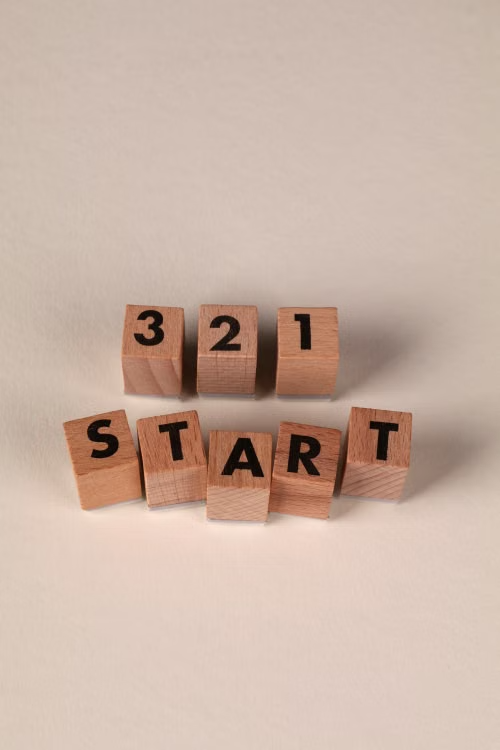
You decide that starting tomorrow you will:
-
Wake up early
-
Exercise every day
-
Read every night
-
Stop using social media
-
Eat healthier
-
Work harder
-
Learn a new skill
-
Follow a perfect routine
It sounds productive, but trying to change eight things at once can quickly become overwhelming.
Instead, choose one behavior.
For example, if you want to become more productive, start with 30 minutes of focused work each morning.
If you want to exercise, start with a 15-minute walk.
If you want to read more, start with five pages a day.
Your first goal isn't to become extremely disciplined.
Your first goal is to prove to yourself that you can follow through consistently.
Once one behavior becomes easier, you can gradually add another.
2. Make Your Goals Specific
A vague goal is difficult to follow.
"Be more productive" isn't a clear action.
"Work on my most important task for 30 minutes before checking social media" is much clearer.
When building self-discipline, decide:
-
What will I do?
-
When will I do it?
-
Where will I do it?
-
How long will I do it?
For example:
"I will write for 30 minutes at my desk at 9 AM from Monday to Friday."
Now you don't have to decide what discipline means every morning.
The decision has already been made.
Clear commitments reduce the amount of negotiation you have with yourself.
3. Stop Depending on Motivation
Motivation can help you start, but it isn't reliable enough to control your entire routine.
Some days you'll feel excited about your goals.
Other days you'll feel tired, distracted, bored, or completely uninterested.
If you only act when you feel motivated, your progress will constantly go up and down.
Self-discipline means learning to take action even when your current mood isn't ideal.
This doesn't mean you should force yourself to work at maximum intensity every day.
Instead, create a minimum version of the behavior.
For example:
-
Full workout → 10 minutes of exercise
-
One hour of reading → 5 pages
-
Two hours of studying → 20 minutes
-
One hour of writing → 10 minutes
The goal is to keep moving.
If lack of motivation is your biggest problem, read How to Build Self Discipline When You Have No Motivation for a deeper look at building discipline when you don't feel motivated.
4. Make the First Step Extremely Small
Many people don't lack discipline. They simply make the starting point too difficult.
Think about the difference between:
"I need to clean my entire room."
and:
"I'll put five things away."
The second task creates much less resistance.
The same principle works for almost anything.
Want to exercise?
Put on your workout clothes.
Want to study?
Open your book.
Want to write?
Open the document and write one sentence.
Want to read?
Read one page.
The purpose of starting small isn't to remain at a tiny level forever.
It's to overcome the resistance that appears before you begin.
Once you start, continuing is often easier.
5. Remove Distractions From Your Environment
Self-discipline becomes harder when your environment constantly encourages the opposite behavior.
Imagine trying to concentrate while your phone is beside you, notifications keep appearing, social media is open, and you're surrounded by other distractions.
You can try to resist all of them.
Or you can remove some of them before you start.
For example:
-
Put your phone in another room while working.
-
Turn off unnecessary notifications.
-
Keep distracting websites closed.
-
Keep your workspace organized.
-
Put your book somewhere visible.
-
Prepare your workout clothes in advance.
-
Keep your most important task ready before you start working.
The goal isn't to have unlimited willpower.
The goal is to need less willpower in the first place.
Good environment design can make disciplined behavior easier to repeat. Current self-discipline guidance similarly emphasizes reducing friction and making desired behaviors easier to start.
6. Keep Promises to Yourself

Every time you keep a realistic promise to yourself, you create evidence that you can trust yourself.
Suppose you tell yourself:
"I'll exercise tomorrow."
Then tomorrow arrives and you skip it.
One missed commitment isn't a disaster.
But if you repeatedly make promises and break them, you can start expecting yourself not to follow through.
The solution isn't to make bigger promises.
It's to make smaller promises that you can actually keep.
Instead of:
"I'll exercise for an hour every day."
start with:
"I'll exercise for 15 minutes today."
Then do it.
If you struggle with following through on your own commitments, read How to Stop Breaking Promises to Yourself.
Keeping small promises consistently is more valuable than making ambitious promises you rarely keep.
7. Stop Quitting When Progress Feels Slow
Discipline becomes especially important when the excitement disappears.
At the beginning of a new goal, progress can feel exciting.
You might start a workout routine, a business project, a study plan, or a new habit with lots of enthusiasm.
Then progress slows.
The routine becomes boring.
You stop seeing immediate results.
That's when many people quit.
Instead of asking:
"Am I seeing results fast enough?"
ask:
"What is the next action I can control?"
You don't have to feel excited every day.
You need a system that helps you continue when excitement fades.
If you often start things with enthusiasm but eventually abandon them, see How to Stop Quitting Everything You Start.
The ability to continue after the initial excitement disappears is one of the most useful forms of self-discipline.
8. Learn to Deal With Procrastination

Procrastination and lack of discipline often appear together.
You know what needs to be done, but you keep delaying it.
You tell yourself:
"I'll do it later."
Then later becomes tomorrow.
Then tomorrow becomes next week.
One useful approach is to stop thinking about the entire task.
Ask:
"What is the next physical action?"
Instead of:
"I need to finish my project."
think:
"I need to open the document."
Instead of:
"I need to study everything."
think:
"I need to read the next two pages."
Breaking a task into a clear next action makes it easier to begin.
And if you're struggling specifically because you feel overwhelmed by everything you need to do, read How to Stop Procrastinating When You're Overwhelmed.
9. Track Your Actions
You don't need a complicated productivity system to become disciplined.
A simple calendar or notebook can work.
Choose one behavior and mark each day you complete it.
For example:
Monday ✓
Tuesday ✓
Wednesday ✓
Thursday ✓
Seeing your actions gives you a clear picture of whether you're actually following through.
But don't become obsessed with having a perfect streak.
The more important rule is:
If you miss, restart quickly.
One missed day doesn't erase your progress.
The problem begins when one missed day becomes a reason to stop completely.
Think of discipline as the ability to return to the path, not the ability to walk perfectly without ever making a mistake.
10. Focus on Consistency Instead of Perfection
You don't need to have a perfect routine to become self-disciplined.
You need a routine that you can actually maintain.
Doing something moderately well for months is usually more useful than doing it perfectly for three days and then abandoning it.
For example:
Better:
20 minutes of exercise five days a week.
Worse:
Two hours of exercise for three days, followed by two weeks of nothing.
Consistency gives your actions time to compound.
It also teaches you an important lesson:
You can trust yourself to keep going.
What to Do When You Have a Bad Day
Even disciplined people have bad days.
You may sleep poorly, become busy, lose focus, miss your routine, or simply not feel like doing anything.
Don't turn one bad day into a story about who you are.
Instead, ask three questions:
-
What stopped me today?
-
What can I change tomorrow?
-
What is the smallest action I can take next?
Then restart.
You don't need to punish yourself for missing one day.
You need to avoid using one bad day as permission to quit.
A Simple Self-Discipline Routine You Can Start Today
If all of this feels like too much, start with this simple system.
Step 1: Choose one goal
Pick the area that matters most right now.
Step 2: Choose one daily action
Make it specific and small.
Step 3: Choose a fixed time
Give the behavior a place in your day.
Step 4: Remove one distraction
Make the right action easier.
Step 5: Track your completion
Use a simple checkmark.
Step 6: Keep going when motivation disappears
Use your routine instead of waiting for the perfect mood.
Step 7: Restart quickly after failure
Don't let one missed day become a week.
That's enough to start building discipline.
You don't need a complicated system.
You need a system you will actually use.
Final Thoughts
Learning how to be self-disciplined isn't about becoming extremely strict with yourself.
It's about becoming more reliable.
You decide what matters, make the action clear, start small, remove distractions, keep realistic promises, and continue even when the initial motivation disappears.
Some days will be easy.
Some days won't.
The goal isn't to perform perfectly every day. The goal is to keep returning to the behaviors that move you toward the person you want to become.
Start with one small promise today—and keep it.
That is how self-discipline begins.
Comments (0)
No comments yet. Be the first to share your thoughts!